

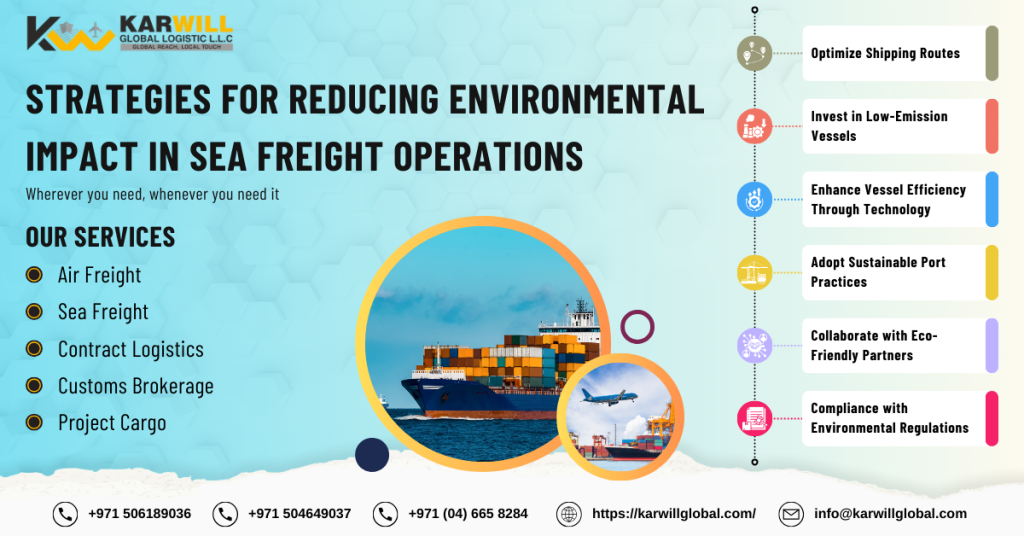
“Cutting emissions, boosting sustainability: Master the art of eco-friendly sea freight operations!”
Sea freight plays a crucial role in global trade, facilitating the movement of goods across continents. However, it also contributes significantly to environmental degradation due to high emissions, waste, and fuel consumption. As businesses become more conscious of their environmental footprint, there is increasing pressure to adopt sustainable practices in sea freight operations. This blog outlines practical strategies that companies can implement to reduce the environmental impact of their sea freight operations.
1. Optimize Shipping Routes
One of the most effective ways to reduce the environmental impact of sea freight is by optimizing shipping routes. The longer the shipping route, the more fuel is consumed, which results in higher carbon emissions. By utilizing advanced technologies like AI-driven navigation and weather forecasting, shipping companies can chart shorter and more efficient routes.
a. Shorter Routes
Shipping companies should aim to choose the shortest and safest shipping lanes, reducing travel time and fuel consumption. Optimized routes also minimize the risk of accidents or delays caused by adverse weather conditions.
b. Avoiding Congested Ports
Congested ports result in ships idling for longer periods, consuming fuel without moving. By strategically selecting less congested ports for loading and unloading, shipping operations can reduce fuel wastage and lower emissions.
c. Utilizing Hub-and-Spoke Models
A hub-and-spoke model involves transporting goods to major hubs (central ports) and then using smaller vessels to deliver goods to final destinations. This model reduces the need for long-haul shipping, saving fuel and cutting emissions.
2. Invest in Low-Emission Vessels
The type of vessel used plays a significant role in determining the environmental footprint of sea freight operations. Traditional vessels powered by heavy fuel oil (HFO) are notorious for producing high levels of sulfur dioxide (SO2), nitrogen oxides (NOx), and carbon dioxide (CO2) emissions. To reduce environmental harm, companies should invest in more eco-friendly vessels.
a. LNG-Powered Vessels
Liquefied Natural Gas (LNG) is emerging as a cleaner alternative to traditional marine fuels. LNG-powered vessels produce fewer NOx, SO2, and CO2 emissions, making them a viable option for reducing the environmental footprint of sea freight. While transitioning to LNG can be costly, the long-term benefits in terms of reduced emissions and compliance with stricter environmental regulations make it a worthwhile investment.
b. Hybrid and Electric Ships
Technological advancements have led to the development of hybrid and electric vessels that run on renewable energy sources like wind and solar power. While these ships are still in the experimental stages, they show great promise in drastically reducing emissions. Companies should stay informed about these innovations and consider adopting hybrid or fully electric vessels as they become commercially viable.
c. Scrubber Technology
For companies that continue to use traditional fuel-powered vessels, investing in exhaust gas cleaning systems (also known as scrubbers) can help reduce harmful emissions. Scrubbers remove sulfur and other pollutants from the ship’s exhaust, ensuring compliance with the International Maritime Organization’s (IMO) sulfur cap regulations.
3. Enhance Vessel Efficiency Through Technology
In addition to investing in low-emission vessels, companies can further reduce the environmental impact of sea freight by enhancing the efficiency of their existing fleet through technology.
a. Slow Steaming
Slow steaming is a practice in which vessels travel at slower speeds to conserve fuel and reduce emissions. While slower transit times may seem counterproductive, the benefits of fuel savings and reduced carbon emissions often outweigh the trade-offs. Implementing slow steaming requires precise planning to ensure that it does not disrupt supply chains.
b. Autonomous Shipping
Autonomous vessels are equipped with advanced navigation systems that allow for optimal route planning and fuel management. These ships are designed to operate with minimal human intervention, leading to reduced fuel consumption, more efficient cargo handling, and lower emissions. Although still in development, autonomous vessels are expected to revolutionize the sea freight industry in the coming years.
c. Hull and Propeller Optimization
Ships can improve their fuel efficiency by maintaining clean hulls and optimized propellers. Fouling (the accumulation of algae and barnacles on the hull) increases drag and reduces fuel efficiency. Regular hull cleaning, along with investing in energy-efficient propeller designs, can lead to substantial reductions in fuel consumption and emissions.
4. Adopt Sustainable Port Practices
Ports play a critical role in the global sea freight network, and their operations can significantly impact the environment. Adopting sustainable port practices can help reduce emissions and minimize the environmental footprint of sea freight.
a. Onshore Power Supply (OPS)
Also known as cold ironing or shore-side electricity, OPS allows ships to turn off their engines while docked and plug into an onshore power supply. This practice reduces emissions from idling vessels and improves air quality in port cities. By using renewable energy sources for onshore power, ports can further minimize their environmental impact.
b. Automated Cargo Handling
Automation in cargo handling can increase operational efficiency and reduce fuel consumption at ports. Automated cranes, vehicles, and other equipment can move goods more quickly and with less energy, resulting in lower emissions.
c. Green Port Certification
Many ports around the world are adopting green certification programs that encourage sustainable practices. By working with certified green ports, companies can align their sea freight operations with eco-friendly initiatives, such as waste reduction, water conservation, and energy-efficient infrastructure.
5. Collaborate with Eco-Friendly Partners
Sustainability in sea freight extends beyond the vessels and ports; it also involves choosing eco-friendly partners and suppliers. Companies can reduce their environmental footprint by collaborating with carriers, freight forwarders, and suppliers that prioritize sustainability.
a. Partnering with Green Shipping Alliances
Green shipping alliances are formed by shipping companies that commit to reducing their environmental impact. By partnering with these alliances, businesses can ensure that their goods are transported using vessels that adhere to stringent environmental standards.
b. Carbon Offset Programs
Many shipping companies offer carbon offset programs that allow businesses to offset the emissions generated by their sea freight operations. These programs typically involve investing in projects that reduce greenhouse gas emissions, such as reforestation, renewable energy, or carbon capture initiatives.
6. Compliance with Environmental Regulations
Finally, it is essential for companies to stay compliant with international and regional environmental regulations. The International Maritime Organization (IMO) has introduced several measures to reduce emissions from the shipping industry, including the 2020 global sulfur cap, which limits the sulfur content in marine fuel to 0.5%.
a. IMO Regulations
Companies should closely monitor changes in IMO regulations and ensure that their sea freight operations remain compliant. This may involve switching to low-sulfur fuels, installing scrubbers, or adopting alternative energy sources like LNG.
b. Regional Regulations
In addition to IMO regulations, companies must also adhere to regional environmental laws that may impose stricter emissions limits in certain areas. For example, the European Union’s Emission Control Areas (ECAs) require vessels to use low-sulfur fuels while operating in designated waters.
Did you know?
Optimizing ship routes, using cleaner fuels, and implementing slow steaming can significantly reduce the environmental impact of sea freight operations.
Final words:
Reducing the environmental impact of sea freight operations is no longer just an option—it’s a necessity. Companies that adopt sustainable practices, such as optimizing shipping routes, investing in low-emission vessels, and collaborating with eco-friendly partners, will not only reduce their carbon footprint but also position themselves as leaders in the green logistics movement. As environmental regulations continue to tighten, businesses that prioritize sustainability in their sea freight operations will be better equipped to meet future challenges while contributing to a cleaner, healthier planet.
For businesses looking to make a meaningful impact in their logistics operations, Karwill Global Logistic LLC can guide you toward more sustainable, efficient, and compliant sea freight solutions.
FAQ’s:
What are the most effective strategies to reduce the environmental impact of sea freight operations?
Implementing cleaner fuel alternatives, optimizing shipping routes, and adopting slow steaming are among the top strategies to minimize the environmental footprint of sea freight.
How does slow steaming help reduce environmental impact in sea freight?
Slow steaming reduces fuel consumption and emissions by lowering ship speeds, which leads to less CO2 output and improved fuel efficiency.
What role does fuel choice play in reducing the environmental impact of sea freight?
Transitioning to cleaner fuels like LNG (Liquefied Natural Gas) or biofuels can significantly lower greenhouse gas emissions and reduce pollution from sea freight operations.