

“Cutting Emissions, Not Efficiency: The New Era of Sustainable Sea Freight”
In recent years, sustainability has emerged as a critical concern across all industries, and sea freight is no exception. As global trade continues to grow, the environmental impact of shipping has come under increasing scrutiny. The sea freight industry, responsible for transporting approximately 90% of the world’s goods, has a significant carbon footprint. However, with innovative technologies and forward-thinking strategies, businesses can take meaningful steps to reduce their environmental impact and contribute to a more sustainable future.
Why Sustainability in Sea Freight Matters
The environmental effects of sea freight are substantial. The maritime industry is responsible for approximately 2.5% to 3% of global greenhouse gas (GHG) emissions, primarily due to the burning of heavy fuel oil, which releases carbon dioxide (CO2), sulfur oxides (SOx), and nitrogen oxides (NOx) into the atmosphere. These emissions not only contribute to climate change but also have detrimental effects on air quality, marine life, and ecosystems. As international trade expands, the sea freight industry’s environmental impact will continue to rise unless proactive measures are taken.
The growing awareness of environmental challenges has led to a shift in consumer and business expectations. Today, customers and partners are increasingly demanding sustainable solutions, and businesses that prioritize eco-friendly practices can gain a competitive advantage. Sustainable sea freight operations are no longer just a choice—they are becoming a necessity for companies looking to thrive in the evolving global marketplace.
Key Challenges Facing Sustainable Sea Freight
Before diving into innovative solutions, it’s essential to understand the key challenges the sea freight industry faces in its journey toward sustainability:
- High Fuel Consumption: Ships traditionally run on heavy fuel oil, which is both inefficient and highly polluting. The energy-intensive nature of maritime transport makes reducing fuel consumption a top priority for sustainability efforts.
- Emissions Regulations: While international bodies like the International Maritime Organization (IMO) have introduced regulations to curb emissions, compliance remains a challenge. Stricter standards are on the horizon, and companies must adapt to meet these new regulations.
- Limited Technological Adoption: While there are innovative technologies available to reduce emissions and improve efficiency, widespread adoption across the shipping industry has been slow. The high costs of retrofitting existing vessels and the need for infrastructure upgrades are significant barriers.
- Supply Chain Complexity: The sea freight industry involves numerous stakeholders, from shipping lines to port operators and logistic providers. Coordinating sustainable efforts across this complex supply chain can be a daunting task.
Innovative Practices for Reducing Carbon Footprints in Sea Freight
Despite these challenges, the sea freight industry is taking significant strides toward sustainability through a combination of technological advancements, operational efficiencies, and policy changes. Below are some of the most promising practices businesses can adopt to reduce their carbon footprint.
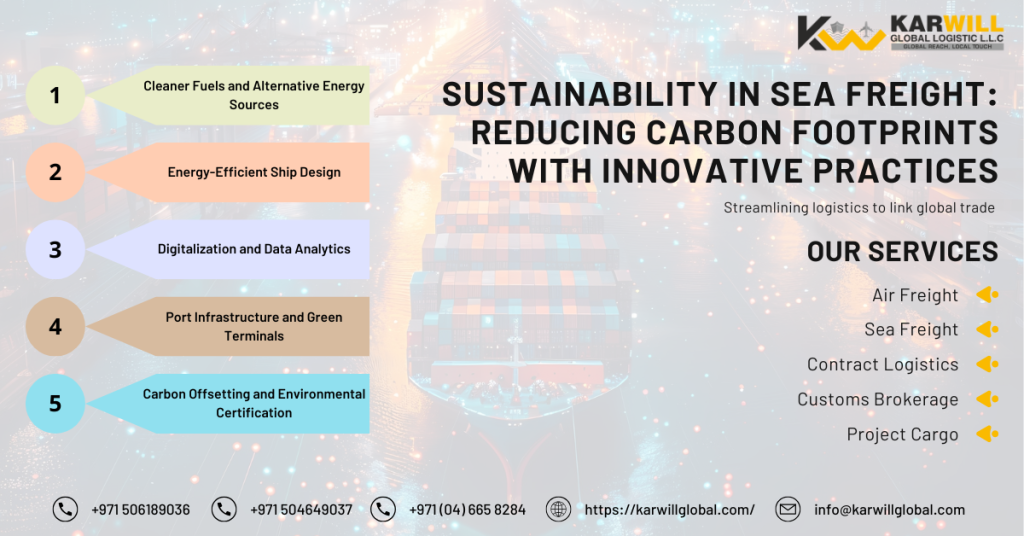
1. Cleaner Fuels and Alternative Energy Sources
One of the most direct ways to reduce emissions from sea freight is by transitioning to cleaner fuels. Liquefied natural gas (LNG) is increasingly being used as an alternative to heavy fuel oil because it burns more cleanly, producing lower CO2, NOx, and SOx emissions. Additionally, biofuels and synthetic fuels, such as hydrogen and ammonia, are gaining traction as potential long-term solutions.
Another promising development is the use of renewable energy sources. Hybrid vessels that use wind-assisted propulsion systems and solar panels to supplement traditional engines can significantly reduce fuel consumption. The maritime industry is also exploring the possibility of fully electric ships, which could revolutionize the sector by eliminating direct emissions altogether.
2. Energy-Efficient Ship Design
Modern ship design is focusing on energy efficiency as a way to reduce fuel consumption and emissions. New ships are being built with streamlined hulls, optimized propeller designs, and lightweight materials that improve fuel efficiency. Retrofitting older vessels with energy-saving technologies, such as air lubrication systems and advanced propellers, is also a viable option for reducing energy use in existing fleets.
In addition, ships equipped with smart technologies can optimize their routes and speeds, further cutting down on fuel consumption. By analyzing weather patterns, currents, and traffic, these systems can help ships avoid delays and unnecessary detours, minimizing emissions.
3. Digitalization and Data Analytics
Digitalization is transforming the sea freight industry, enabling businesses to monitor, measure, and optimize their operations with unprecedented precision. With the help of data analytics, companies can track fuel usage, emissions, and maintenance needs in real time, allowing them to make informed decisions that reduce their environmental impact.
Digital platforms also facilitate collaboration across the supply chain, ensuring that all stakeholders—from shipping lines to port operators—are working together to achieve sustainability goals. For example, digital twin technology, which creates a virtual replica of a ship or port, can simulate various scenarios and help operators identify the most sustainable options.
4. Port Infrastructure and Green Terminals
Sustainability in sea freight extends beyond the vessels themselves. Ports play a critical role in the global supply chain, and improving port infrastructure can significantly reduce the carbon footprint of shipping operations. Green terminals, which use renewable energy sources such as wind or solar power, can lower the emissions associated with loading and unloading cargo.
In addition, shore power technology allows ships to plug into the electrical grid while docked, rather than idling their engines and burning fuel. This reduces emissions in port areas, improving air quality for local communities. Automated cranes and electric vehicles used for cargo handling are also helping to cut down on emissions in ports.
5. Carbon Offsetting and Environmental Certification
For businesses that want to go the extra mile, carbon offsetting offers a way to balance out emissions that cannot be eliminated through operational changes. By investing in projects that reduce or capture greenhouse gases—such as reforestation, renewable energy, or methane capture—companies can offset the emissions generated by their sea freight activities.
Environmental certifications, such as the Clean Cargo Working Group (CCWG) certification, can also help businesses demonstrate their commitment to sustainability. These certifications require companies to meet stringent environmental standards and provide transparency around their emissions and sustainability practices.
The Role of Policy and Regulation
Government regulations are playing an increasingly important role in driving sustainability in the sea freight industry. The IMO has set ambitious targets for reducing emissions, including a 50% reduction in greenhouse gas emissions by 2050 compared to 2008 levels. These regulations are pushing companies to adopt cleaner technologies and more efficient practices.
At the national and regional levels, governments are introducing incentives and penalties to encourage sustainability. For example, the European Union’s Emissions Trading System (ETS) is set to include the shipping industry, which will require companies to purchase carbon allowances for their emissions. These policies will make sustainability a more pressing issue for businesses operating in the sea freight sector.
How Karwill Global Logistic LLC is Leading the Way in Sustainable Sea Freight?
At Karwill Global Logistic LLC, we understand the critical importance of sustainability in today’s sea freight operations. As a forward-thinking logistics provider, we have embraced eco-friendly practices to reduce our carbon footprint and provide environmentally responsible solutions for our clients. By leveraging cleaner fuel options, optimizing shipping routes, and adopting energy-efficient technologies, we are committed to leading the way in sustainable sea freight.
In addition to our operational efforts, we also prioritize collaboration with partners who share our sustainability goals. From green port initiatives to carbon offsetting programs, we are continually exploring new ways to minimize our environmental impact while ensuring efficient, reliable service.
Final Words:
The future of sea freight lies in sustainability. As global trade grows and environmental concerns intensify, businesses must take proactive steps to reduce their carbon footprint and adopt eco-friendly practices. From cleaner fuels to digitalization and energy-efficient ship designs, there are numerous strategies available to make sea freight more sustainable.
By embracing these innovative practices, companies can not only reduce their environmental impact but also gain a competitive edge in a market that increasingly values sustainability. With the right approach, the sea freight industry can continue to thrive while contributing to a greener, more sustainable future.
FAQ’s:
1. How can sea freight companies reduce their carbon footprint?
Sea freight companies can reduce their carbon footprint by adopting fuel-efficient vessels, optimizing routes to minimize fuel consumption, implementing slow steaming, using alternative energy sources like wind or solar power, and integrating digital tools for real-time route optimization and fleet management.
2. What innovative technologies are driving sustainability in sea freight?
Innovative technologies like AI-based route optimization, advanced hull designs, and hybrid propulsion systems are revolutionizing sustainability in sea freight. These innovations reduce fuel consumption, improve efficiency, and enable companies to monitor environmental impact in real-time, leading to significant emission reductions.
3. Why is sustainability important for the future of sea freight?
Sustainability is crucial for sea freight to meet global environmental regulations, reduce operational costs, and meet increasing customer demand for greener shipping solutions. Adopting sustainable practices also enhances brand reputation and ensures long-term profitability in an industry undergoing a green transformation.